

Community-Based Food System For Sustainable Living: Cassava Rice in Cireundeu, Cimahi, Indonesia
- Titing Kartika
- Apr 12
- 4 min read
Updated: Apr 17
Food consumption patterns vary significantly across communities, influenced by cultural traditions, environmental conditions, and local knowledge systems. These variations contribute to the diversity of staple foods and reflect how communities adapt to their surroundings. In this context, community-based food systems play a crucial role in promoting sustainable living by strengthening local livelihoods, enhancing food security, and reducing dependence on external food supplies. Such systems are increasingly important in addressing global challenges related to food crises and environmental sustainability.
In Indonesia, rice is widely recognized as the dominant staple food, deeply embedded in national culture and daily consumption patterns. However, an alternative and locally grounded food system can be observed in Cireundeu, a traditional village located in Leuwigajah, Cimahi City, West Java.

The Cireundeu community practices an ethnoagriculture system that integrates agricultural activities with customary values, beliefs, and environmental. Unlike most Indonesian communities, the people of Cireundeu consume Rasi (cassava rice) as their primary staple food, demonstrating a unique adaptation rooted in local wisdom and historical experience.
The adoption of cassava rice in Cireundeu originated from a critical historical event. Around 1918, the region experienced severe famine and prolonged drought, which made rice cultivation extremely difficult. Under these challenging conditions, cassava emerged as a resilient and accessible source of carbohydrates. Recognizing this potential, community elders encouraged residents to shift from rice to cassava consumption as a survival strategy. Over time, this adaptive response evolved into a long-standing tradition that has been preserved and transmitted across.
Today, Rasi is not only a staple food but also a cultural symbol of resilience and independence.

Source: Author
From a sustainability perspective, the continued consumption of cassava rice reflects a strong model of community-based food security. While rice prices in Indonesia often fluctuate and tend to increase, the people of Cireundeu maintain a level of independence by relying on locally available resources. This practice reduces vulnerability to market instability and highlights the importance of diversifying staple food sources.
The Cireundeu case demonstrates how local knowledge and traditional practices can contribute to long-term resilience in the face of economic and environmental uncertainties.
In addition to its role in food security, cassava-based practices in Cireundeu have also evolved into a distinctive tourism attraction. The uniqueness of the community’s food system draws visitors who are interested in learning about sustainable lifestyles and alternative food practices. Tourists are not only offered a variety of cassava-based culinary products but are also engaged in experiential learning activities. These include observing and participating in the processes of planting, harvesting, and processing cassava into Rasi. Such experiences provide educational value while simultaneously preserving and promoting local cultural heritage.

The sustainability of this community-based food system is rooted in the Cireundeu philosophy of living harmoniously with nature. This is reflected in forest management practices that classify land into protected forests, conservation forests, and utilization areas designated for agriculture, ensuring ecological balance and sustainable resource use. This balanced approach ensures environmental conservation while supporting the community’s subsistence needs, thereby reinforcing the sustainability of their food system.
Despite their strong adherence to tradition, the Cireundeu community demonstrates openness to innovation and adaptation to changing times. This is evident in the diversification of cassava-based products developed by local residents. In addition to Rasi, the community produces various value-added products such as egg rolls, traditional snacks (including saroja, cireng, and rengginang), and cassava skin jerky. These products not only enrich the variety of local cuisine but also contribute to economic development. Small-scale enterprises in the village generate a steady monthly income, indicating the economic viability of integrating traditional food systems with entrepreneurial activities.
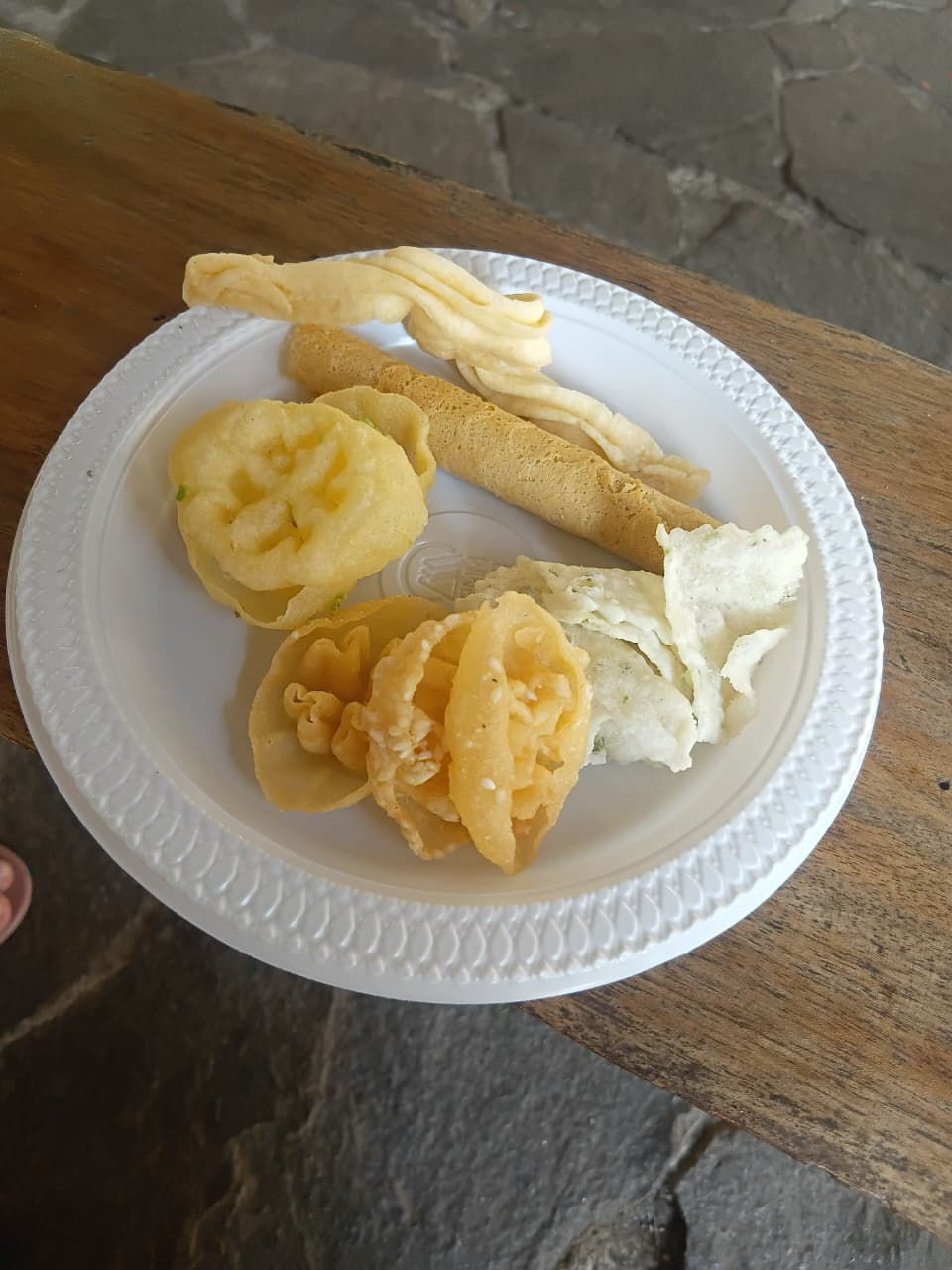
Furthermore, tourism activities in Cireundeu provide additional economic opportunities and strengthen community engagement. The village regularly attracts visitors, creating a platform for cultural exchange, education, and income generation. The integration of food systems and tourism reflects a holistic approach to sustainable development, where economic, social, and environmental dimensions are interconnected. This model aligns with broader concepts of sustainable tourism, which emphasize community participation, cultural preservation, and environmental responsibility.

From a nutritional perspective, cassava rice also offers potential benefits as an alternative staple food. Cassava contains carbohydrates and essential nutrients that support dietary diversification, which is important for long-term food resilience. Promoting cassava as a staple food contributes to reducing overdependence on rice and supports national food security strategies.
In conclusion, the case of Cireundeu illustrates how a community-based food system rooted in local wisdom can evolve into a sustainable and resilient model for the future.
Through the integration of cultural values, environmental stewardship, economic innovation, and tourism development, the community has successfully created a system that supports sustainable living. This model not only ensures food security at the local level but also offers a replicable framework for other communities facing similar challenges. Therefore, the Cireundeu experience highlights the importance of preserving and promoting local knowledge as a key component of sustainable development in both the food and tourism sectors.


Comments